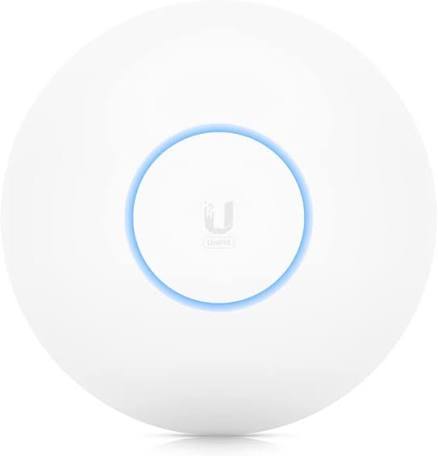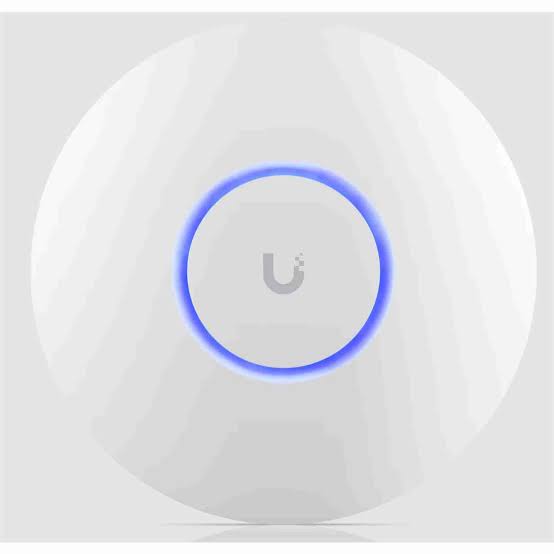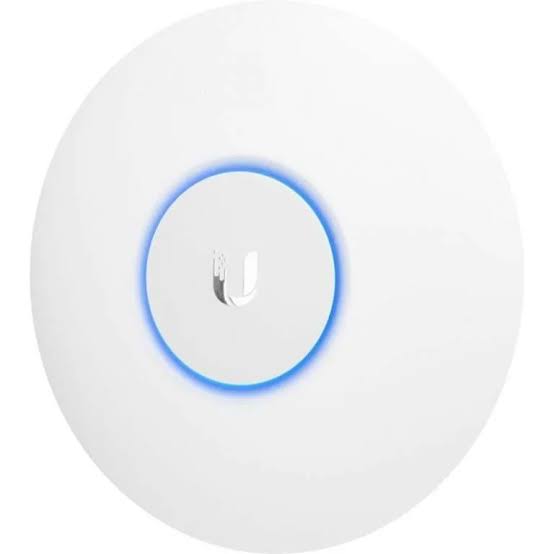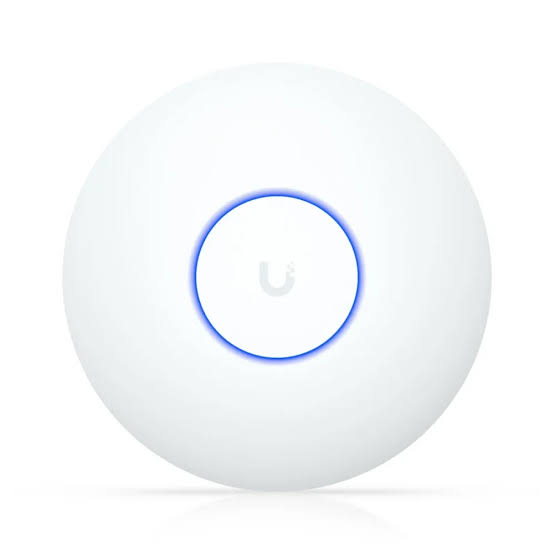
Ubiquiti UniFi U7 Lite
Buy Ubiquiti UniFi U7 Lite in Kenya from Orbitlink Solutions. Compact WiFi 7 AP with 4 spatial streams, 2.5GbE uplink, PoE, 200+ clients and 115m² coverage.
Ubiquiti UniFi U7 Lite Access Point in Kenya

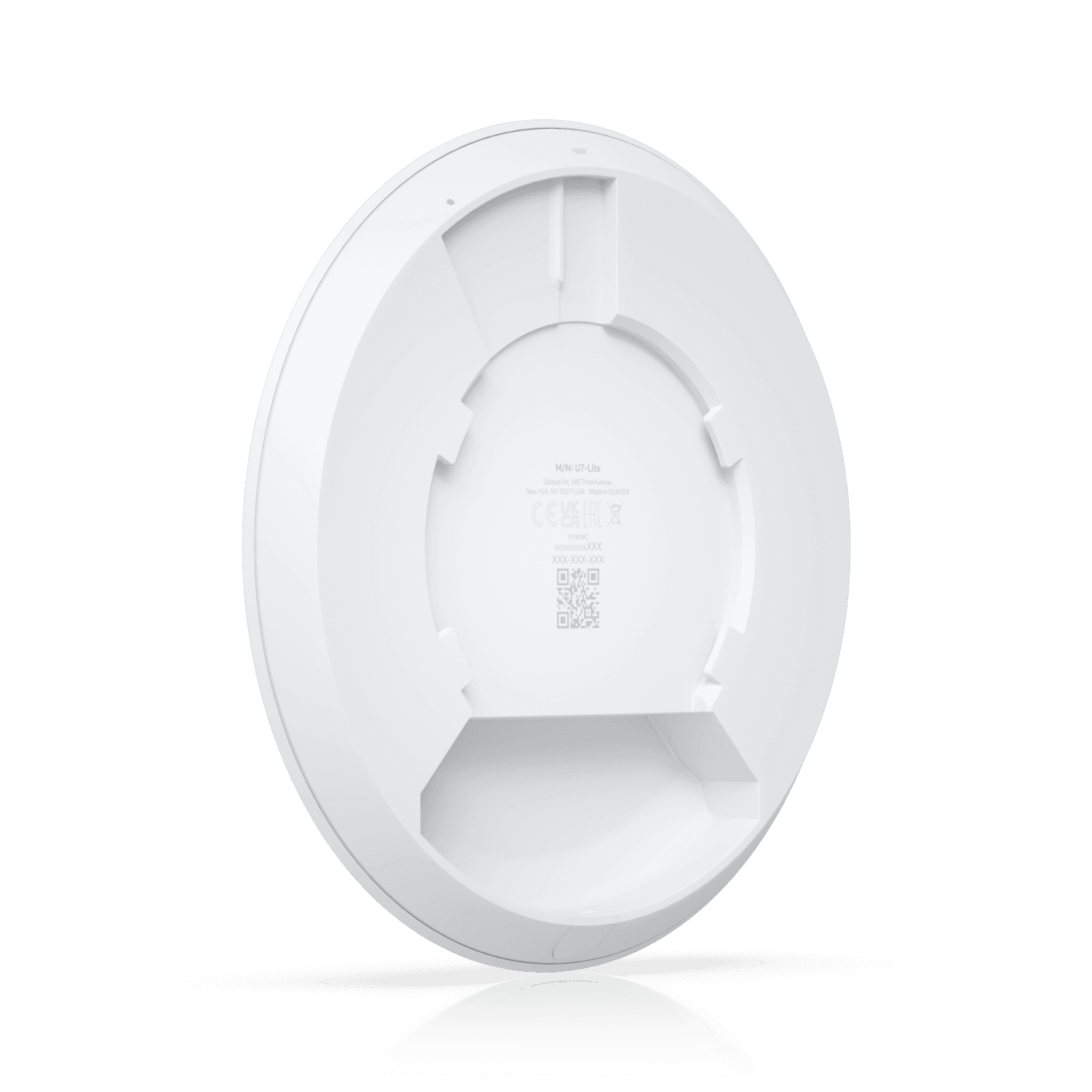
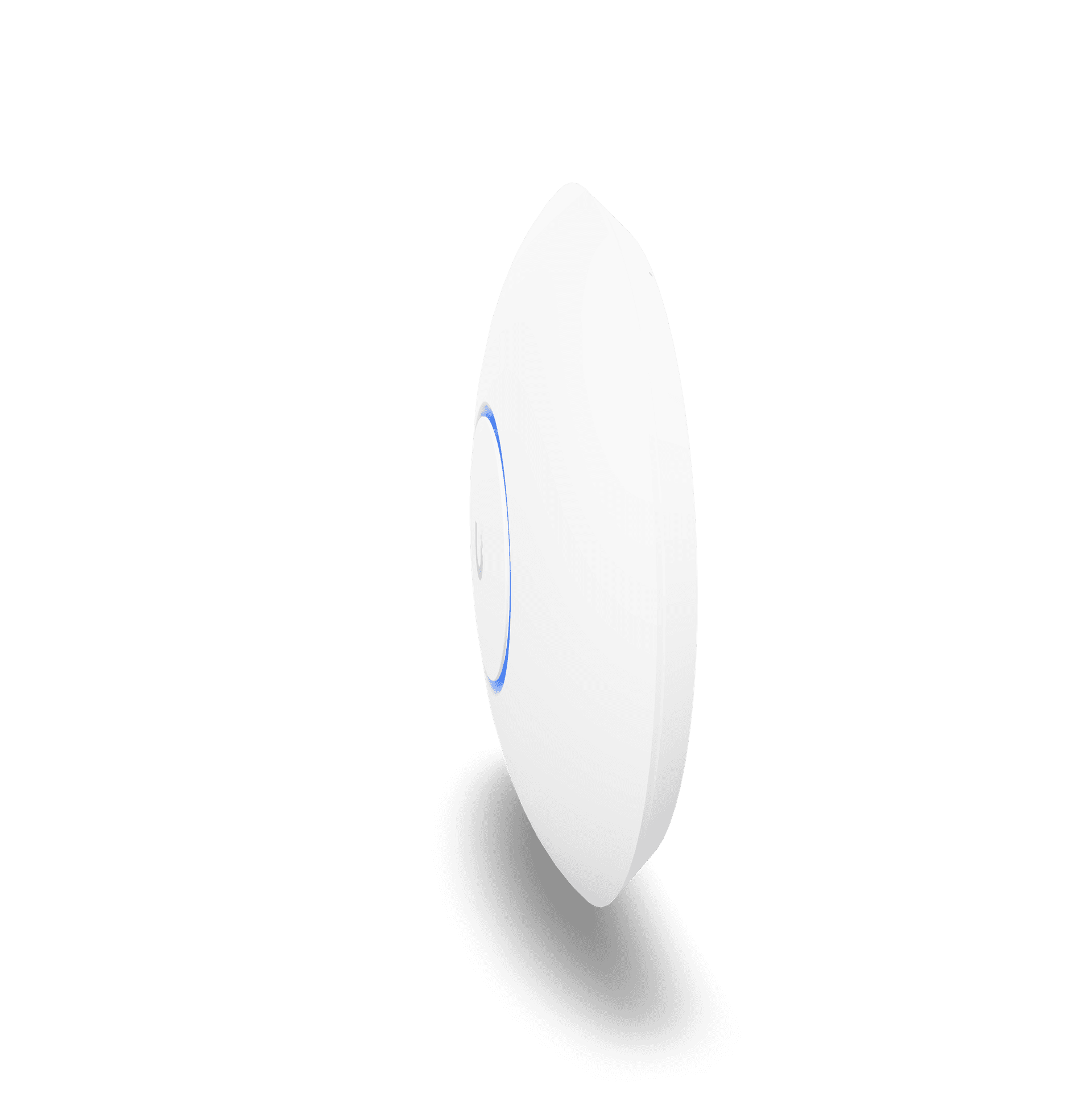
The Ubiquiti UniFi U7 Lite is a compact ceiling-mounted WiFi 7 access point designed for homes, small and medium offices, shops, clinics, restaurants and other environments that need a newer-generation UniFi AP without moving to a higher-end U7 Pro model. Ubiquiti currently describes it as a compact WiFi 7 AP with four spatial streams and a 2.5GbE uplink.
The U7 Lite uses 2×2 MU-MIMO on both 5GHz and 2.4GHz, supports WiFi 7 data rates up to 4.3Gbps on 5GHz and up to 688Mbps on 2.4GHz, and provides a manufacturer-rated coverage area of 115m² / 1,250ft² with support for 200+ clients.
Unlike higher-tier U7 models, the U7 Lite does not include a 6GHz radio. Its WiFi 7 operation is therefore based on the 2.4GHz and 5GHz bands, making it a more cost-conscious option for users who want WiFi 7 features and a 2.5GbE wired uplink without requiring tri-band infrastructure.
Ubiquiti U7 Lite Key Features
| Feature | Specification |
|---|---|
| Product Name | UniFi U7 Lite |
| Model | U7-Lite |
| Wi-Fi Standard | WiFi 7 |
| Radio Bands | 2.4GHz + 5GHz |
| Spatial Streams | 4 |
| 5GHz MIMO | 2×2 DL/UL MU-MIMO |
| 2.4GHz MIMO | 2×2 DL/UL MU-MIMO |
| 5GHz Max PHY Rate | 4.3Gbps |
| 2.4GHz Max PHY Rate | 688Mbps |
| 5GHz Max Channel Width | 240MHz |
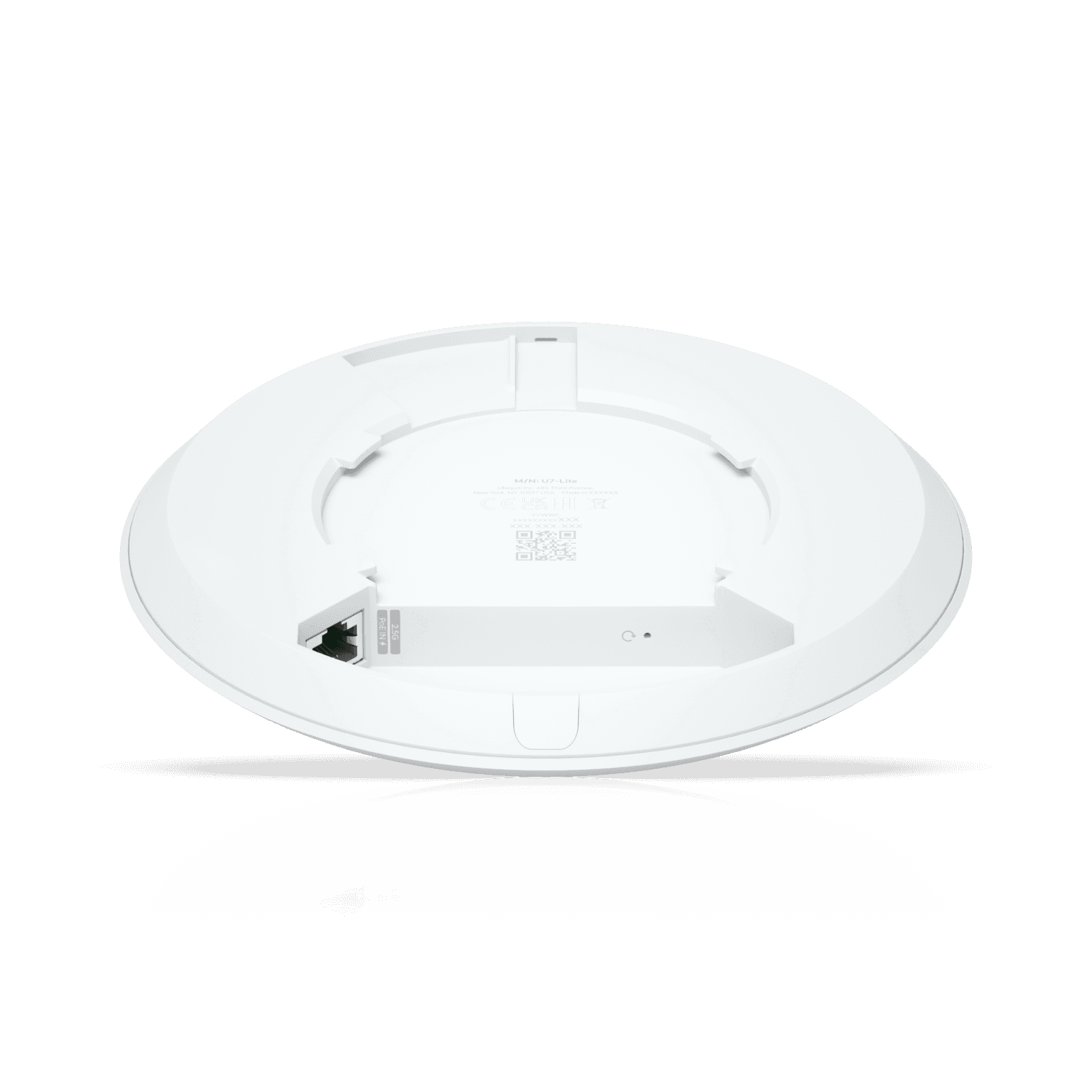
| Ethernet Uplink | 1 × 2.5GbE RJ45 |
| Coverage Rating | 115m² / 1,250ft² |
| Maximum Client Rating | 200+ |
| 5GHz Antenna Gain | 5dBi |
| 2.4GHz Antenna Gain | 4dBi |
| 5GHz Max TX Power | 24dBm |
| 2.4GHz Max TX Power | 23dBm |
| Power Method | PoE |
| Supported Voltage | 42.5–57V DC |
| Maximum Power Consumption | 13W |
| Mounting | Ceiling / Wall |
| Dimensions | Ø171.5 × 33mm |
| Weight | 313g |
| Management | UniFi Network |
| Best For | Homes, SMBs, offices, shops and Gigabit/multi-gigabit networks |
WiFi 7 on 2.4GHz and 5GHz
The U7 Lite supports 802.11be / WiFi 7 and maintains backward compatibility with:
-
WiFi 6
-
WiFi 5
-
WiFi 4
Ubiquiti lists WiFi 7 data rates from 7.3Mbps up to 4.3Gbps depending on band, channel width, modulation and number of spatial streams.
This allows the AP to serve both new WiFi 7 devices and older laptops, smartphones, tablets, printers and IoT equipment.
5GHz WiFi 7 Performance
The 5GHz radio is the main performance radio on the U7 Lite.
Ubiquiti specifies:
2×2 DL/UL MU-MIMO
WiFi 7
up to 240MHz channel width
up to 4.3Gbps theoretical PHY rate
5dBi antenna gain
24dBm maximum transmit power.
The 240MHz channel capability is one of the major differences between WiFi 7 and earlier mainstream UniFi Lite APs.
However, real throughput depends on the client device, available channel width, interference and uplink speed.
2.4GHz WiFi 7 Performance
On 2.4GHz, Ubiquiti specifies:
2×2 DL/UL MU-MIMO
up to 688Mbps theoretical PHY rate
40MHz maximum channel width
4dBi antenna gain
23dBm maximum transmit power.
The 2.4GHz band remains useful for:
-
IoT devices
-
Printers
-
POS terminals
-
Smart-home devices
-
Longer-range clients
-
Legacy wireless equipment
For high-throughput laptops and phones, 5GHz is usually preferable where signal quality allows.
Four Spatial Streams
The U7 Lite provides four total spatial streams:
2 on 5GHz
plus
2 on 2.4GHz.
This places it below higher-capacity U7 Pro-class APs, but it provides a strong balance of:
-
Cost
-
Power consumption
-
WiFi 7 capability
-
Multi-gigabit uplink
-
Compact form factor
for smaller installations.
2.5GbE Uplink
One of the biggest upgrades over models such as the U6+, U6 Pro and U6-LR is the 2.5GbE wired uplink.
Ubiquiti gives the U7 Lite:
1 × 2.5 Gigabit Ethernet RJ45 port.
This means the AP is no longer restricted by a 1GbE wired interface.
A typical topology can be:
Fibre / Starlink
↓
2.5GbE-capable Router / Gateway
↓
2.5GbE PoE Switch
↓
U7 Lite
↓
WiFi 7 Clients
Why 2.5GbE Matters
The U7 Lite's 5GHz radio can negotiate up to 4.3Gbps PHY rate, so a 1GbE uplink would create a more obvious wired bottleneck.
The 2.5GbE port gives the AP substantially more wired headroom than older Gigabit UniFi models.
That does not mean one device will receive 2.5Gbps internet automatically.
Actual throughput still depends on:
-
Internet connection
-
Gateway
-
Switch
-
Ethernet cabling
-
Client radio
-
RF conditions
-
Channel width
-
Application overhead
No 6GHz Radio
An important limitation is that the U7 Lite does not include a 6GHz radio.
Its two radios are:
2.4GHz
and
5GHz.
Buyers who specifically need WiFi 7 on 6GHz should consider higher-tier models such as the U7 Pro or other tri-band UniFi options.
This does not make the U7 Lite unsuitable for WiFi 7.
It simply positions the product as a lower-cost dual-band WiFi 7 AP.
240MHz Channel Support
The U7 Lite supports EHT channel widths up to 240MHz on 5GHz.
This provides substantially more theoretical radio capacity than common 80MHz or 160MHz Wi-Fi configurations.
However, wide channels require sufficient clean spectrum.
In congested environments, using the widest possible channel is not always the best design choice.
A narrower channel layout can sometimes provide better overall network stability when multiple APs are deployed close together.
Multi-Link Operation
Ubiquiti introduced Multi-Link Operation (MLO) support across its U7 access-point family through UniFi AP software. Ubiquiti notes that WPA3 or WPA3 Enterprise is required for the best connectivity and roaming experience when MLO is enabled.
MLO is a WiFi 7 technology designed to allow compatible clients to make more flexible use of available wireless links.
Actual MLO capability and behavior still depend on:
-
Client hardware
-
Client drivers
-
UniFi software version
-
Security configuration
-
Available bands
115m² Coverage Rating
Ubiquiti currently gives the U7 Lite a manufacturer coverage rating of:
115m²
or
1,250ft².
This is a planning figure rather than a guarantee.
Actual coverage is influenced by:
-
Reinforced concrete
-
Stone walls
-
Glass
-
Metal
-
Floor slabs
-
Furniture
-
Interference
-
AP mounting position
-
Client radio capability
For commercial installations, several correctly positioned APs are often better than trying to cover an entire property with one device.
200+ Client Rating
Ubiquiti lists the U7 Lite for 200+ maximum clients.
This should be interpreted carefully.
There is a major difference between:
200 associated devices
and
200 users simultaneously performing heavy traffic.
Real capacity depends on:
-
Traffic type
-
Airtime
-
Number of active devices
-
Signal quality
-
Channel planning
-
Internet bandwidth
For very high-density environments, a higher-tier UniFi access point is usually more appropriate.
PoE Powered
The U7 Lite is powered using PoE.
Ubiquiti specifies a supported voltage range of:
42.5–57V DC
and a maximum power consumption of:
13W.
This allows both data and power to travel over one Ethernet cable.
PoE Adapter and Switch Selection
Ubiquiti currently promotes a 2.5G PoE+ Adapter (30W) as an accessory alongside the U7 Lite.
A compatible multi-gigabit PoE switch can also be used.
The important point is that if you want to benefit from the U7 Lite's 2.5GbE uplink, the switch port must also support 2.5GbE, not just Gigabit Ethernet.
Can U7 Lite Work on a Gigabit PoE Switch?
Yes, provided the PoE requirements are satisfied.
However, a Gigabit Ethernet port limits the wired uplink to 1Gbps.
The AP will still function, but you will not be taking full advantage of its 2.5GbE interface.
For a new deployment, pairing the U7 Lite with a 2.5GbE-capable PoE switch is preferable when budget allows.
13W Power Consumption
Ubiquiti lists the maximum power consumption at 13W.
For example:
4 U7 Lite APs × 13W = 52W
maximum theoretical AP load before allowing for switch overhead and any additional PoE devices.
This should be considered when selecting a PoE switch.
Compact Form Factor
The U7 Lite measures:
171.5mm diameter × 33mm depth
and weighs:
313g.
It remains compact enough for:
-
Office ceilings
-
Homes
-
Shops
-
Clinics
-
Restaurants
-
Reception areas
-
Classrooms
Ceiling and Wall Mounting
The U7 Lite supports:
Ceiling mounting
and
Wall mounting
and Ubiquiti includes the Lite Mount with the AP.
Ubiquiti's mounting guide distinguishes the Lite mounting family from its larger Pro mounting system.
Ceiling installation is generally preferred for broad indoor coverage.
UniFi Network Requirements
Ubiquiti currently specifies:
UniFi Network version 9.0.114 or later
for the U7 Lite.
Current supported mobile versions listed by Ubiquiti include:
-
iOS 10.20.2 or later
-
Android 10.21.7 or later
for the applicable UniFi mobile management software.
Keeping the UniFi controller current is particularly important for newer U7 features.
Centralized UniFi Management
Through UniFi Network, administrators can manage:
-
SSIDs
-
Connected clients
-
VLANs
-
Wireless channels
-
Transmit power
-
Band steering
-
Wireless mesh
-
Guest Wi-Fi
-
PPSK
-
RADIUS
-
Speed limits
-
Client isolation
-
Wi-Fi schedules
Ubiquiti lists these among the U7 Lite's current feature set.
Wireless Meshing
The U7 Lite supports wireless meshing.
This allows the AP to form a wireless backhaul to another compatible UniFi AP where Ethernet cannot be installed.
Where cabling is possible, however, wired Ethernet is normally preferable.
Preferred
2.5GbE PoE Switch → Ethernet → U7 Lite
Alternative
Wired UniFi AP → Wireless Mesh → U7 Lite
Wireless mesh consumes radio capacity that could otherwise serve client devices.
Band Steering
The U7 Lite supports band steering.
This can help guide compatible devices toward 5GHz where appropriate while keeping 2.4GHz available for IoT and longer-range clients.
The client still participates in the final band-selection decision.
Fast Roaming
Ubiquiti lists support for:
802.11k
802.11v
802.11r.
These technologies can assist compatible clients when roaming between multiple UniFi APs.
For example:
Reception U7 Lite
↓
Office U7 Lite
↓
Meeting Room U7 Lite
can use consistent SSIDs while client devices move around the building.
Private Pre-Shared Keys
The U7 Lite supports PPSK – Private Pre-Shared Keys.
This allows different users or groups to use different passwords while connecting to the same Wi-Fi network name.
PPSK can be useful in:
-
Offices
-
Apartments
-
Shared facilities
-
Hospitality environments
Dynamic RADIUS VLAN Assignment
Ubiquiti supports dynamic RADIUS-assigned VLANs and RADIUS over TLS / RadSec on the U7 Lite.
This allows network access to be assigned according to authenticated identity.
For example:
Employee authenticates
↓
RADIUS verifies user
↓
Staff VLAN assigned
This can provide better segmentation than relying only on separate SSIDs.
Guest Wi-Fi and Captive Portal
Ubiquiti lists support for:
-
Custom captive portal branding
-
Voucher authentication
-
Payment-based authentication
-
Password authentication
-
External portal servers
-
Guest isolation
on the U7 Lite.
This makes it useful for:
Hotels
Restaurants
Cafés
Clinics
Reception areas
Shared offices
Client Isolation
The U7 Lite supports:
Guest network isolation
and
client device isolation.
This can prevent clients on public Wi-Fi from directly communicating with one another.
Wi-Fi Speed Limiting
Ubiquiti supports Wi-Fi speed limits on the U7 Lite.
For example:
Staff network → higher allocation
Guest network → controlled bandwidth
This can help prevent guests from consuming excessive internet capacity.
U7 Lite for Small Offices
The U7 Lite can be an excellent fit for newer small-office deployments.
A typical network could be:
Fibre / Starlink
↓
Router / Gateway
↓
2.5GbE PoE Switch
↓
U7 Lite APs
↓
Staff + Guest + IoT Devices
It provides more wired headroom than older Gigabit-only APs while retaining a relatively compact size.
U7 Lite for Medium Offices
Several U7 Lite APs can be distributed across an office.
For example:
U7 Lite – Reception
U7 Lite – Open Office
U7 Lite – Meeting Area
U7 Lite – Management Area
This usually provides better roaming and signal quality than relying on one powerful AP to penetrate many walls.
U7 Lite for Homes
The U7 Lite is also suitable for homes that want WiFi 7 without requiring a high-end tri-band AP.
A typical setup can be:
Router
↓
2.5GbE PoE Switch
↓
Ground Floor U7 Lite
Upper Floor U7 Lite
Wired backhaul provides the most predictable performance.
U7 Lite for Restaurants and Cafés
The U7 Lite can serve:
POS
Management
Staff
Guests
using separate SSIDs and VLANs.
The gateway or firewall should enforce the security policy between these networks.
U7 Lite for Clinics
A clinic can configure separate networks for:
Staff
Administration
Guests
IoT
The U7 Lite provides wireless access while UniFi or another compatible gateway handles routing and security.
U7 Lite for Schools
The U7 Lite can be appropriate for:
-
Classrooms
-
Staff areas
-
Administration
-
Libraries
-
Smaller training rooms
For very high-density auditoriums, a higher-capacity model should be evaluated.
U7 Lite for Hotels
It can be useful in:
-
Smaller lobbies
-
Corridors
-
Reception
-
Meeting rooms
-
Business centres
For room-by-room coverage, UniFi In-Wall models may be better suited.
U7 Lite for Starlink
The U7 Lite can distribute a Starlink connection throughout a property.
A possible topology is:
Starlink
↓
Gateway
↓
PoE Switch
↓
U7 Lite
The AP improves the local wireless network.
It does not increase Starlink's upstream internet capacity.
U7 Lite for Fibre Internet
The U7 Lite is especially attractive for faster fibre environments because of its 2.5GbE uplink.
For example:
2Gbps Fibre
↓
Multi-Gigabit Gateway
↓
2.5GbE PoE Switch
↓
U7 Lite
This architecture gives the AP much more wired headroom than a Gigabit-only access point.
U7 Lite vs U6+
| Feature | U7 Lite | U6+ |
|---|---|---|
| Wi-Fi Generation | WiFi 7 | WiFi 6 |
| Spatial Streams | 4 | 4 |
| 5GHz MIMO | 2×2 | 2×2 |
| 5GHz PHY | 4.3Gbps | 2.4Gbps |
| Ethernet | 2.5GbE | 1GbE |
| Coverage | 115m² | 140m² |
| Clients | 200+ | 300+ |
| Max Power | 13W | 9W |
The U7 Lite provides a much faster wired uplink and newer WiFi 7 radio capability, while the U6+ has a larger published coverage and client rating.
For a new multi-gigabit deployment, the U7 Lite is generally the more future-oriented option.
U7 Lite vs U6 Pro
The U6 Pro uses a stronger 4×4 5GHz radio and six total streams, while the U7 Lite uses two 2×2 radios.
The U7 Lite's advantages include:
-
WiFi 7
-
2.5GbE uplink
-
240MHz 5GHz support
-
Newer platform
The U6 Pro's strength remains radio capacity for busy WiFi 6 environments.
The better choice depends on whether you value radio density or newer WiFi 7/multi-gig infrastructure more.
U7 Lite vs U7 Pro
| Feature | U7 Lite | U7 Pro |
|---|---|---|
| Wi-Fi | WiFi 7 | WiFi 7 |
| Bands | 2.4 + 5GHz | 2.4 + 5 + 6GHz |
| Spatial Streams | 4 | 6 |
| Ethernet | 2.5GbE | 2.5GbE |
| Coverage | 115m² | Higher class |
| 6GHz | No | Yes |
| Target | Value / SMB | Professional / higher-performance |
The U7 Pro is better suited to environments that need 6GHz, more radio capacity and a higher overall performance class.
The U7 Lite is the more economical choice where dual-band WiFi 7 is sufficient.
U7 Lite vs U7 Long-Range
The U7 Long-Range focuses more heavily on coverage.
The U7 Lite focuses on:
-
Compact size
-
Lower-tier pricing
-
WiFi 7
-
2.5GbE
-
Smaller-site deployments
The U7-LR is generally the better choice where wider coverage is the main requirement.
Advantages of Ubiquiti U7 Lite
The U7 Lite offers:
-
WiFi 7
-
Four spatial streams
-
2×2 radios on both bands
-
4.3Gbps theoretical 5GHz PHY
-
688Mbps 2.4GHz PHY
-
Up to 240MHz 5GHz channels
-
2.5GbE uplink
-
115m² manufacturer coverage
-
200+ client rating
-
PoE power
-
Compact design
-
Wireless meshing
-
Band steering
-
802.11k/v/r
-
MLO support through U7 firmware
-
PPSK
-
Dynamic VLAN assignment
-
RadSec
-
Captive portal
-
Client isolation
-
UniFi centralized management
Limitations of Ubiquiti U7 Lite
No 6GHz
The U7 Lite is dual-band only.
Four Spatial Streams
It is not designed as a high-density flagship AP.
115m² Coverage
Its manufacturer-rated coverage is smaller than some U6 and U7 Long-Range models.
Requires Modern UniFi Software
Ubiquiti currently specifies UniFi Network 9.0.114 or later.
2.5GbE Infrastructure Needed for Full Wired Benefit
The AP can run on Gigabit Ethernet, but the 2.5GbE advantage is lost unless the upstream network also supports multi-gigabit speeds.
Who Should Buy the Ubiquiti U7 Lite?
The U7 Lite is especially suitable for:
Homes
Small offices
Medium offices
Shops
Restaurants
Clinics
Smaller schools
Apartments
Reception areas
New multi-gigabit networks
Users upgrading from U6 Lite or older AC access points
It is particularly attractive where WiFi 7 and 2.5GbE are desired without the cost of a higher-end U7 Pro.
Typical U7 Lite Network Architecture
A modern deployment could look like:
Fibre / Starlink
↓
Multi-Gigabit Gateway
↓
2.5GbE PoE Switch
↓
U7 Lite Access Points
↓
WiFi 7 / WiFi 6 / Older Clients
For several rooms:
2.5GbE PoE Switch
├── U7 Lite – Reception
├── U7 Lite – Office
├── U7 Lite – Meeting Room
└── U7 Lite – Common Area
This allows all APs to be centrally managed through UniFi Network.
Ubiquiti U7 Lite Price in Kenya
Ubiquiti's US store currently lists the U7 Lite at a US$99 manufacturer-store price before its displayed surcharge. This is a U.S. manufacturer reference and not Orbitlink Solutions' Kenya selling price.
Kenya pricing can vary because of:
-
Exchange rates
-
Freight
-
Taxes
-
Distributor pricing
-
Warranty
-
Stock availability
-
Included accessories
Contact Orbitlink Solutions for the current Ubiquiti U7 Lite price and stock availability in Kenya.
Why Buy Ubiquiti U7 Lite from Orbitlink Solutions?

The U7 Lite is particularly attractive for users upgrading from older Gigabit-only access points because it combines WiFi 7 with a 2.5GbE uplink in a compact product.
The correct deployment still needs suitable PoE, switching and structured cabling. Installing the U7 Lite on a 100Mbps or Gigabit-limited switch will work, but it will prevent the network from using the full capability of its 2.5GbE interface.
Orbitlink Solutions can help match the U7 Lite with compatible PoE switches, routers, Ethernet cabling and other UniFi equipment so the access point is properly integrated into the complete network.
Watch the Ubiquiti U7 Lite Video
The U7 Lite's biggest technical improvement over older Lite-class UniFi APs is the combination of WiFi 7 and 2.5GbE. Its 5GHz radio supports up to 4.3Gbps theoretical PHY speed with 240MHz channels, while the wired interface can move beyond the 1GbE limitation found on products such as the U6+ and U6 Lite.
The product is still deliberately positioned below Ubiquiti's higher-tier WiFi 7 access points. It uses four total streams and does not include a 6GHz radio, so it should not be treated as a direct replacement for a U7 Pro in environments where higher density, tri-band operation or 6GHz capability is important.
For many smaller offices, shops, homes and moderate commercial deployments, however, this can be a sensible balance. The U7 Lite provides newer-generation wireless capability and multi-gigabit Ethernet without requiring the user to move into a significantly more expensive enterprise radio platform.
Frequently Asked Questions About Ubiquiti U7 Lite
What is the Ubiquiti U7 Lite?
The U7 Lite is a compact ceiling-mounted WiFi 7 UniFi access point with four spatial streams and a 2.5GbE uplink.
Is there a Ubiquiti U7 Lite B+?
I could not verify a separate official Ubiquiti model called U7 Lite B+. Ubiquiti's current official catalogue identifies the product as U7 Lite / U7-Lite.
Is U7 Lite WiFi 7?
Yes.
Does U7 Lite support 2.4GHz?
Yes. It has a 2×2 2.4GHz radio rated up to 688Mbps.
Does U7 Lite support 5GHz?
Yes. Its 2×2 5GHz radio supports up to 4.3Gbps theoretical PHY rate.
Does U7 Lite support 6GHz?
No.
How many spatial streams does U7 Lite have?
Four total.
What is the maximum 5GHz rate?
Ubiquiti lists up to 4.3Gbps with 240MHz channel width.
What is the maximum 2.4GHz rate?
Up to 688Mbps.
Does U7 Lite have 2.5GbE?
Yes. It has one 2.5GbE RJ45 interface.
Can U7 Lite work on a 1GbE switch?
Yes, but its wired uplink will operate at Gigabit speed rather than 2.5GbE.
How much area does U7 Lite cover?
Ubiquiti lists approximately 115m² / 1,250ft².
How many clients can U7 Lite support?
Ubiquiti publishes a 200+ maximum client specification.
Does U7 Lite require PoE?
Yes.
How much power does U7 Lite consume?
Maximum rated consumption is 13W.
Does Ubiquiti offer a PoE adapter for it?
Yes. Ubiquiti lists a 2.5G PoE+ Adapter (30W) as an accessory.
Can U7 Lite be ceiling mounted?
Yes, and the Lite Mount is included.
Can U7 Lite be wall mounted?
Yes.
Does U7 Lite support mesh?
Yes.
Does U7 Lite support fast roaming?
Yes. It supports 802.11k, 802.11v and 802.11r.
Does U7 Lite support MLO?
Ubiquiti's U7 firmware includes MLO support, with WPA3 or WPA3 Enterprise recommended/required for the relevant MLO configuration.
Does U7 Lite support guest Wi-Fi?
Yes. It supports captive portal and guest-isolation features.
Does U7 Lite support PPSK?
Yes.
Does U7 Lite support RADIUS?
Yes, including dynamic RADIUS VLAN assignment and RadSec.
Can U7 Lite work with MikroTik routers?
Yes. It can operate behind a MikroTik gateway or other third-party router if DHCP, VLAN and firewall configuration are correct.
Can U7 Lite work with Starlink?
Yes. It can distribute a Starlink connection across the local network.
Is U7 Lite better than U6+?
For a new network prioritizing WiFi 7 and multi-gigabit Ethernet, the U7 Lite has clear advantages because of its 2.5GbE uplink and newer wireless standard. The U6+ has a higher published coverage and client rating, so the choice depends on the deployment.
Is U7 Lite better than U7 Pro?
The U7 Pro is a higher-tier model with more radio capability and 6GHz support. The U7 Lite is the more value-oriented dual-band WiFi 7 option.
What is the Ubiquiti U7 Lite price in Kenya?
Contact Orbitlink Solutions for the current exact-model price and stock availability.
Buy Ubiquiti UniFi U7 Lite in Kenya
The Ubiquiti UniFi U7 Lite is a strong entry point into WiFi 7 for users who need a compact access point with four spatial streams, 2.5GbE, 240MHz 5GHz channels, 200+ client capacity and centralized UniFi management.
Its principal limitations are the lack of a 6GHz radio and its four-stream architecture. For small and medium networks, however, those trade-offs can make it a practical alternative to more expensive U7 Pro-class hardware.
Official Ubiquiti Resources
Ubiquiti U7 Lite official technical specifications
Ubiquiti U7 Lite official product page
Contact Orbitlink Solutions
Orbitlink Solutions
Lyric House, 7th Floor, Room S9, Kimathi Street, Nairobi
Call / Text / WhatsApp: +254 743 720 551
Email: info@orbitlinksolutions.co.ke
Alternative Email: orbitlinksolutions@gmail.com
Opening Hours: Monday–Saturday, 9:00 AM–6:00 PM
Availability: Nairobi pickup and nationwide delivery
Contact Orbitlink Solutions for the current Ubiquiti U7 Lite price in Kenya, stock availability, 2.5GbE PoE switching, structured cabling, UniFi setup and professional Wi-Fi installation.
Need Help Choosing? Ask a Technician
Get guidance on setup, compatibility, stock, and delivery before buying for your project.