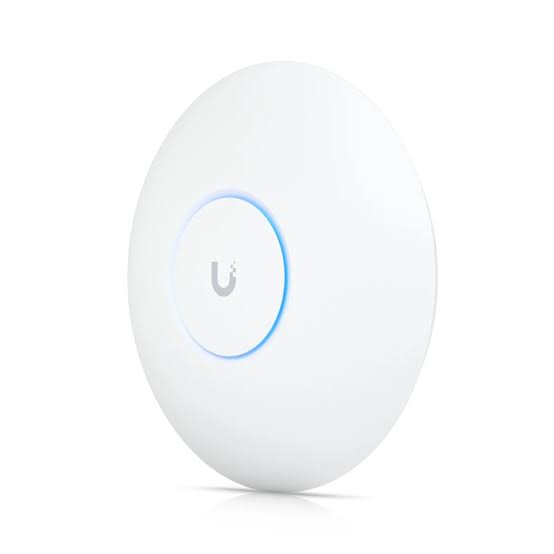
Ubiquiti UniFi U7 Pro
Buy Ubiquiti UniFi U7 Pro in Kenya from Orbitlink Solutions. Tri-band WiFi 7 AP with 6GHz, 6 spatial streams, 2.5GbE, PoE+, 300+ clients and 140m² coverage.
Ubiquiti UniFi U7 Pro Access Point in Kenya
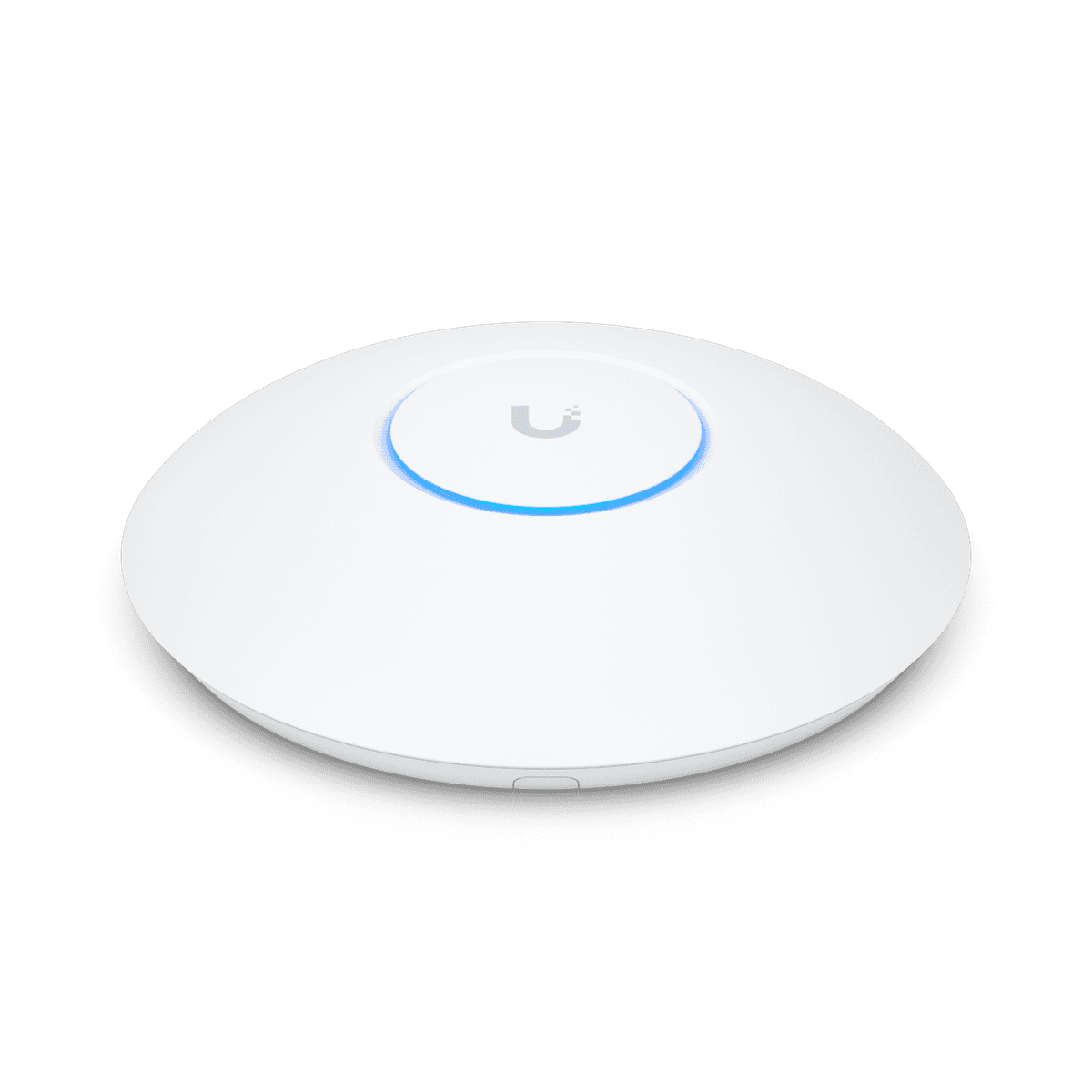
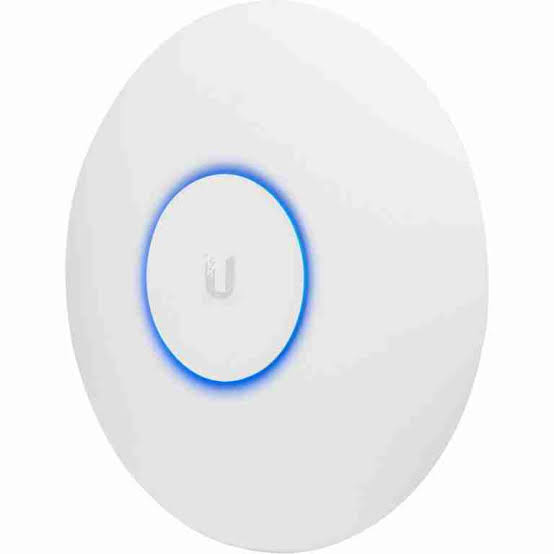
The Ubiquiti UniFi U7 Pro (U7-Pro) is a professional tri-band WiFi 7 access point designed for offices, hotels, schools, healthcare facilities, conference environments and other demanding commercial networks. Ubiquiti currently describes it as a ceiling-mounted WiFi 7 AP with six spatial streams and 6GHz support for large-scale deployments.
The U7 Pro uses three 2×2 MU-MIMO radios covering 2.4GHz, 5GHz and 6GHz. It supports theoretical PHY rates of up to 688Mbps on 2.4GHz, 4.3Gbps on 5GHz and 5.8Gbps on 6GHz, with a 2.5GbE uplink and PoE+ power. Ubiquiti rates it for approximately 140m² / 1,500ft² of coverage and 300+ clients.
The U7 Pro is particularly important for new multi-gigabit deployments because it combines WiFi 7, 6GHz and 2.5GbE in one AP. However, 6GHz operation remains subject to country and regulatory availability, so deployment planning should verify whether the band and allowed channel ranges are available in the intended location.
Ubiquiti U7 Pro Key Features
| Feature | Specification |
|---|---|
| Product Name | UniFi U7 Pro |
| Model | U7-Pro |
| Wi-Fi Generation | WiFi 7 |
| Radio Bands | 2.4GHz + 5GHz + 6GHz |
| Spatial Streams | 6 |
| 2.4GHz MIMO | 2×2 DL/UL MU-MIMO |
| 5GHz MIMO | 2×2 DL/UL MU-MIMO |
| 6GHz MIMO | 2×2 DL/UL MU-MIMO |
| 2.4GHz Max PHY Rate | 688Mbps |
| 5GHz Max PHY Rate | 4.3Gbps |
| 6GHz Max PHY Rate | 5.8Gbps |
| 5GHz Max Channel Width | 240MHz |
| 6GHz Max Channel Width | 320MHz |
| Ethernet Uplink | 1 × 2.5GbE RJ45 |
| Coverage Rating | 140m² / 1,500ft² |
| Maximum Client Rating | 300+ |
| 2.4GHz Antenna Gain | 4dBi |
| 5GHz Antenna Gain | 6dBi |
| 6GHz Antenna Gain | 5.8dBi |
| Power Method | PoE+ |
| Supported Voltage | 44–57V DC |
| Maximum Power Consumption | 21W |
| Mounting | Ceiling / Wall |
| Dimensions | Ø206 × 46mm |
| Management | UniFi Network |
| Best For | Professional WiFi 7, multi-gigabit and 6GHz networks |
Tri-Band WiFi 7
The U7 Pro operates across:
2.4GHz
5GHz
and
6GHz.
This tri-band architecture is one of the main differences between the U7 Pro and value-oriented models such as the U7 Lite.
2.4GHz
Useful for:
-
IoT devices
-
Printers
-
POS terminals
-
Legacy equipment
-
Devices needing better wall penetration
5GHz
Useful for:
-
Laptops
-
Smartphones
-
Business devices
-
General high-performance Wi-Fi
6GHz
Useful for:
-
Compatible WiFi 6E and WiFi 7 clients
-
Cleaner spectrum
-
Very wide channels
-
High-capacity modern networks
6GHz availability and permitted power/channel use depend on local regulations.
Six Spatial Streams
The U7 Pro provides six total spatial streams:
2 × 2.4GHz
2 × 5GHz
2 × 6GHz.
That means each radio uses 2×2 MU-MIMO.
This differs from products such as the U6 Pro, which dedicates four streams to 5GHz, or newer U7 Pro XGS, which uses eight total streams and a stronger 4×4 5GHz radio.
The U7 Pro's strength is therefore not simply raw stream count. Its major advantages come from:
-
Tri-band operation
-
6GHz
-
WiFi 7
-
2.5GbE
-
Wider channels
6GHz WiFi 7 Performance
The 6GHz radio is one of the U7 Pro's most important features.
Ubiquiti specifies:
2×2 DL/UL MU-MIMO
up to 320MHz channel width
up to 5.8Gbps theoretical PHY rate
5.8dBi antenna gain
23dBm maximum TX power.
The 320MHz channel capability is a major WiFi 7 feature.
However, wide channels require:
-
Compatible WiFi 7 clients
-
Available spectrum
-
Regulatory permission
-
Suitable interference conditions
A 320MHz channel is therefore not automatically the best setting in every deployment.
5GHz WiFi 7 Performance
The U7 Pro's 5GHz radio provides:
2×2 DL/UL MU-MIMO
up to 240MHz channel width
up to 4.3Gbps theoretical PHY rate
6dBi antenna gain
26dBm maximum transmit power.
This makes 5GHz especially important for devices that do not support 6GHz.
Most mixed business environments will continue to rely heavily on 5GHz even after introducing WiFi 7.
2.4GHz WiFi 7 Performance
The 2.4GHz radio provides:
2×2 DL/UL MU-MIMO
up to 40MHz channels
up to 688Mbps theoretical PHY rate
4dBi antenna gain
23dBm maximum TX power.
This band remains important for IoT and compatibility.
Although the U7 Pro is a high-end AP, not every device needs to use 5GHz or 6GHz.
2.5GbE Ethernet Uplink
The U7 Pro includes:
1 × 1/2.5GbE RJ45 interface.
This is a major upgrade over older UniFi access points that use 1GbE.
A suitable network architecture can look like:
Fibre Internet
↓
Multi-Gigabit Gateway
↓
2.5GbE PoE+ Switch
↓
U7 Pro
↓
WiFi 7 Clients
For users with multi-gigabit fibre, this gives the AP significantly more wired headroom than a Gigabit-only model.
Can U7 Pro Deliver 5.8Gbps Internet?
Not to one user simply because the 6GHz radio is rated at 5.8Gbps.
That number is a theoretical PHY rate.
Actual application throughput is lower because of:
-
Wi-Fi protocol overhead
-
Client capability
-
Interference
-
Distance
-
Channel conditions
-
Shared airtime
-
Ethernet uplink
-
Internet speed
The U7 Pro's wired uplink is 2.5GbE, so traffic entering or leaving the LAN through Ethernet is limited by the practical capacity of that port.
140m² Coverage Rating

Ubiquiti currently rates the U7 Pro for approximately:
140m²
or
1,500ft².
This is a planning specification rather than a guaranteed real-world result.
Coverage depends on:
-
Concrete
-
Stone
-
Metal
-
Glass
-
Furniture
-
Floor slabs
-
Interference
-
AP mounting
-
Device antennas
For commercial deployments, AP placement and site survey measurements remain important.
300+ Client Rating
Ubiquiti lists the U7 Pro with a maximum client specification of:
300+ clients.
This should not be interpreted as 300 users all receiving multi-gigabit performance simultaneously.
Client capacity depends heavily on:
-
Airtime utilization
-
Application type
-
Band distribution
-
Client signal
-
Upstream bandwidth
-
Channel design
The 300+ figure is best treated as a manufacturer association-capacity rating.
PoE+ Power
The U7 Pro requires PoE+.
Ubiquiti specifies:
44–57V DC
and
21W maximum power consumption.
A suitable PoE+ switch or injector is therefore required.
For multiple APs, the total switch PoE budget should be calculated carefully.
For example:
4 × 21W = 84W
maximum AP load before adding other PoE devices and design margin.
PoE+ Adapter
Ubiquiti lists a 30W PoE+ Adapter as an accessory for the U7 Pro.
This can be useful when deploying a single AP without a dedicated PoE+ switch.
For larger networks, a multi-gigabit PoE+ switch is usually more practical.
Dimensions and Build
The U7 Pro measures approximately:
Ø206 × 46mm
and weighs approximately:
680g.
Its enclosure combines:
-
Polycarbonate
-
Metal
while the mounting system uses stainless and galvanized steel components.
The AP can be mounted on either:
Ceiling
or
Wall
and Ubiquiti includes its Pro Mount.
UniFi Network Management
The U7 Pro is managed through UniFi Network.
Ubiquiti currently specifies:
UniFi Network 8.0.28 or later.
Through UniFi Network, administrators can configure and monitor:
-
SSIDs
-
Clients
-
VLANs
-
Channel settings
-
Transmit power
-
Guest networks
-
Captive portals
-
PPSK
-
RADIUS
-
Band steering
-
Wireless mesh
-
Roaming features
-
Wi-Fi schedules
-
Speed limits
Wireless Meshing
The U7 Pro supports wireless meshing.
This allows a UniFi AP to use another AP as wireless backhaul where Ethernet cannot be installed.
However, wired Ethernet is normally preferable.
Preferred
2.5GbE PoE+ Switch → Ethernet → U7 Pro
Alternative
Wired UniFi AP → Wireless Mesh → U7 Pro
Wireless meshing consumes radio airtime that could otherwise serve clients.
Band Steering
The U7 Pro supports band steering.
This can help move capable clients toward higher-performance bands where appropriate.
In a tri-band deployment, client behavior becomes especially important because different devices may support:
-
2.4GHz only
-
2.4 + 5GHz
-
2.4 + 5 + 6GHz
The client still participates in the final roaming and band-selection decision.
Fast Roaming
Ubiquiti lists support for:
802.11k
802.11v
802.11r.
These technologies can improve roaming between APs for compatible devices.
For example:
Reception U7 Pro
↓
Open Office U7 Pro
↓
Boardroom U7 Pro
can use common SSIDs while users move between areas.
Passpoint / Hotspot 2.0
The U7 Pro supports Passpoint / Hotspot 2.0.
This can be useful in:
-
Hotels
-
Enterprise networks
-
Airports
-
Shared facilities
-
Public-access environments
where more sophisticated wireless authentication is required.
Guest Wi-Fi and Captive Portal
The U7 Pro supports UniFi guest-access features including:
-
Custom landing pages
-
Voucher authentication
-
Payment authentication
-
External portal servers
-
Password authentication
-
Guest-network isolation
This makes it well suited to hospitality and commercial guest networks.
Private Pre-Shared Keys
The U7 Pro supports Private Pre-Shared Keys (PPSK).
This lets different users or groups use different Wi-Fi credentials while connecting through the same SSID.
This can simplify segmentation without creating many visible wireless network names.
Dynamic RADIUS VLAN Assignment
Ubiquiti supports:
Dynamic RADIUS-assigned VLANs
and
RADIUS over TLS / RadSec.
This allows user identity to determine network assignment.
For example:
Employee authentication
↓
RADIUS verification
↓
Staff VLAN
This can be useful for enterprise access-control policies.
Client Isolation
The U7 Pro supports both:
Guest network isolation
and
client device isolation.
This is particularly useful where guests should not communicate directly with other wireless devices.
Wi-Fi Speed Limiting
The U7 Pro supports wireless speed limiting through UniFi Network.
For example:
Staff network → Full allocation
Guest network → Restricted bandwidth
This can help prevent guest users from consuming disproportionate internet capacity.
U7 Pro for Offices
The U7 Pro is highly suitable for newer professional office networks.
A typical topology could be:
2Gbps / 5Gbps Fibre
↓
Multi-Gigabit Gateway
↓
2.5GbE PoE+ Switch
↓
U7 Pro APs
↓
Staff / Guest / IoT Clients
Its 2.5GbE uplink makes it particularly attractive where the wired network has already moved beyond Gigabit Ethernet.
U7 Pro for Hotels
Hotels can deploy U7 Pro units in:
-
Lobbies
-
Conference areas
-
Restaurants
-
Business centres
-
Corridors
-
Meeting spaces
6GHz can be especially useful where compatible modern devices need cleaner spectrum in busy wireless environments.
For individual rooms, in-wall APs may provide better room-by-room design.
U7 Pro for Schools and Universities
The U7 Pro can be suitable for:
-
Classrooms
-
Libraries
-
Staff areas
-
Computer labs
-
Meeting rooms
-
Administration
-
Training areas
For extremely dense lecture halls, AP placement and capacity planning remain essential.
U7 Pro for Conference Environments

Conference users commonly carry:
Laptop + phone + tablet
which can create a large number of wireless associations.
The U7 Pro's tri-band architecture can help distribute capable clients across 2.4, 5 and 6GHz.
However, large conference venues should still use multiple APs rather than relying on one AP's 300+ client rating.
U7 Pro for Restaurants
The U7 Pro can support separate networks for:
POS
Management
Staff
Guests
with different VLAN and policy assignments.
This helps keep business-critical devices separated from public Wi-Fi.
U7 Pro for Clinics and Healthcare Facilities
Possible SSIDs can include:
Staff
Administration
Guest
IoT
Approved devices
The AP provides wireless connectivity, while security should be enforced through proper VLANs, gateway policies and authentication.
U7 Pro for Starlink
The U7 Pro can distribute a Starlink connection throughout a property.
Typical design:
Starlink
↓
Gateway
↓
2.5GbE PoE+ Switch
↓
U7 Pro
The AP improves the local wireless environment.
It does not increase the internet bandwidth provided by Starlink.
U7 Pro for Fibre Internet
The U7 Pro is especially well suited to faster fibre connections.
For example:
2.5Gbps Fibre
↓
2.5GbE Gateway
↓
2.5GbE PoE+ Switch
↓
U7 Pro
This allows the wired infrastructure to make meaningful use of the AP's multi-gigabit interface.
U7 Pro vs U7 Lite
| Feature | U7 Pro | U7 Lite |
|---|---|---|
| Wi-Fi | WiFi 7 | WiFi 7 |
| Bands | 2.4 + 5 + 6GHz | 2.4 + 5GHz |
| Spatial Streams | 6 | 4 |
| 6GHz | Yes | No |
| 6GHz PHY | 5.8Gbps | — |
| 5GHz PHY | 4.3Gbps | 4.3Gbps |
| Uplink | 2.5GbE | 2.5GbE |
| Coverage | 140m² | 115m² |
| Clients | 300+ | 200+ |
| Power | PoE+ | PoE |
The U7 Lite is the more value-focused dual-band option.
The U7 Pro is the stronger choice where:
-
6GHz matters
-
More coverage is required
-
More clients are expected
-
A professional tri-band network is being built
U7 Pro vs U6 Pro
| Feature | U7 Pro | U6 Pro |
|---|---|---|
| Wi-Fi | WiFi 7 | WiFi 6 |
| Bands | 2.4 + 5 + 6GHz | 2.4 + 5GHz |
| Spatial Streams | 6 | 6 |
| 5GHz Radio | 2×2 | 4×4 |
| 6GHz | Yes | No |
| Ethernet | 2.5GbE | 1GbE |
| Coverage | 140m² | 140m² |
| Clients | 300+ | 250+ |
The U6 Pro still has a powerful 4×4 5GHz radio, while the U7 Pro gains:
-
WiFi 7
-
6GHz
-
2.5GbE
-
Wider channels
-
Newer platform
For a completely new multi-gigabit deployment, the U7 Pro is generally the more future-oriented option.
U7 Pro vs U7 Pro XG
The newer U7 Pro XG retains the same basic six-stream tri-band radio structure but upgrades the wired uplink to 10GbE.
| Feature | U7 Pro | U7 Pro XG |
|---|---|---|
| Wi-Fi | WiFi 7 | WiFi 7 |
| Spatial Streams | 6 | 6 |
| 6GHz | Yes | Yes |
| 5GHz Max PHY | 4.3Gbps | 4.3Gbps |
| 6GHz Max PHY | 5.8Gbps | 5.8Gbps |
| Uplink | 2.5GbE | 10GbE |
| Coverage | 140m² | 140m² |
| Clients | 300+ | 300+ |
The U7 Pro remains appropriate for 2.5GbE networks, while the U7 Pro XG targets faster wired infrastructure.
U7 Pro vs U7 Pro XGS
The U7 Pro XGS is a substantially higher-end model.
Ubiquiti currently specifies:
-
8 spatial streams
-
4×4 5GHz
-
10GbE uplink
-
500+ clients
-
160m² coverage
-
PoE++
for the U7 Pro XGS.
The U7 Pro is therefore better positioned for mainstream professional deployments, while the XGS is more suitable for very demanding enterprise environments.
Advantages of Ubiquiti U7 Pro
The U7 Pro offers:
-
WiFi 7
-
Tri-band operation
-
6GHz support
-
Six spatial streams
-
5.8Gbps 6GHz PHY
-
4.3Gbps 5GHz PHY
-
320MHz 6GHz channels
-
240MHz 5GHz channels
-
2.5GbE uplink
-
140m² manufacturer-rated coverage
-
300+ client rating
-
PoE+
-
Wireless meshing
-
Band steering
-
Fast roaming
-
Passpoint
-
PPSK
-
Dynamic VLAN assignment
-
RadSec
-
Captive portal
-
Client isolation
-
UniFi centralized management
Limitations of Ubiquiti U7 Pro
2×2 Radios
Each band is 2×2 rather than 4×4.
6GHz Availability Varies
6GHz operation depends on local regulatory approval and supported country settings.
Requires PoE+
The U7 Pro requires a stronger PoE power source than entry-level models.
21W Maximum Consumption
Its power requirements are higher than lower-tier APs.
2.5GbE, Not 10GbE
For very high-end wired networks, models such as U7 Pro XG or XGS provide faster uplinks.
Who Should Buy the Ubiquiti U7 Pro?
The U7 Pro is particularly suitable for:
Professional offices
Hotels
Schools and universities
Healthcare facilities
Conference facilities
Restaurants
Large homes
New multi-gigabit Wi-Fi deployments
Users upgrading from U6 or AC-generation UniFi APs
It makes the most sense when WiFi 7, 6GHz and 2.5GbE provide meaningful value to the network.
Typical U7 Pro Network Architecture
A strong professional deployment could look like:
Multi-Gigabit Fibre / Starlink
↓
UniFi or Third-Party Multi-Gigabit Gateway
↓
2.5GbE PoE+ Managed Switch
↓
U7 Pro APs
↓
WiFi 7 / WiFi 6E / WiFi 6 Clients
For multiple areas:
2.5GbE PoE+ Switch
├── U7 Pro – Reception
├── U7 Pro – Office
├── U7 Pro – Boardroom
└── U7 Pro – Conference Area
Ubiquiti U7 Pro Price in Kenya
International manufacturer pricing varies by region and taxes, so those figures should not be treated as Orbitlink Solutions' Kenya price.
Contact Orbitlink Solutions for the current Ubiquiti U7 Pro price and stock availability in Kenya.
The complete deployment budget may also include:
-
2.5GbE PoE+ switch
-
Router or gateway
-
Cat6/Cat6A cabling
-
Rack equipment
-
UPS
-
Installation
-
Additional APs
Why Buy Ubiquiti U7 Pro from Orbitlink Solutions?
The U7 Pro is most useful when the surrounding infrastructure can actually support its capabilities. Installing it on an older 100Mbps or basic Gigabit network will work, but it may prevent users from taking full advantage of the AP's 2.5GbE uplink and WiFi 7 performance.
A properly designed deployment should consider the gateway, PoE+ switch, Ethernet cabling, AP placement, client devices and whether 6GHz is available under local regulations.
Orbitlink Solutions can help match the U7 Pro with suitable switching, routers, structured cabling and additional access points for offices, hotels, schools, clinics and commercial Wi-Fi deployments.
Watch the Ubiquiti U7 Pro Video
The U7 Pro's main technical advantage is the combination of tri-band WiFi 7 and multi-gigabit Ethernet. The 6GHz radio can use channel widths up to 320MHz and has a theoretical PHY rate of 5.8Gbps, while the 5GHz radio supports up to 4.3Gbps at 240MHz. These are radio-link rates rather than guaranteed application throughput, but they provide substantial headroom for modern WiFi 7 clients.
Its 2.5GbE uplink is also an important improvement over older Gigabit UniFi APs. This allows businesses with multi-gigabit fibre and suitable switching to move more than 1Gbps between the AP and the LAN, although actual wireless results will still depend on the client, spectrum and network design.
The U7 Pro should therefore be viewed as a professional tri-band WiFi 7 platform, not simply as a faster replacement for every U6 model. Sites with mainly older 2.4GHz and 5GHz clients may not immediately use all of its capabilities, while environments with WiFi 6E and WiFi 7 devices can benefit more directly from the additional 6GHz spectrum.
Frequently Asked Questions About Ubiquiti U7 Pro
What is the Ubiquiti U7 Pro?
The U7 Pro is a professional tri-band WiFi 7 UniFi access point with six spatial streams, 6GHz and a 2.5GbE uplink.
Is U7 Pro WiFi 7?
Yes.
Does U7 Pro support 6GHz?
Yes, where 6GHz operation is permitted by the relevant regulatory domain.
Does U7 Pro support 5GHz?
Yes. Its 5GHz radio supports up to 4.3Gbps theoretical PHY rate.
Does U7 Pro support 2.4GHz?
Yes. Its 2.4GHz radio supports up to 688Mbps theoretical PHY rate.
How many spatial streams does U7 Pro have?
Six total, with two on each radio.
Is U7 Pro 4×4?
No. Each of its three radios is 2×2.
What is the maximum 6GHz rate?
Ubiquiti lists 5.8Gbps at 320MHz.
What is the maximum 5GHz rate?
Up to 4.3Gbps at 240MHz.
What is the maximum 2.4GHz rate?
Up to 688Mbps at 40MHz.
Does U7 Pro have 2.5GbE?
Yes.
Can U7 Pro work on a Gigabit switch?
Yes, if PoE requirements are met, but the wired uplink will be limited to Gigabit speed.
How much area does U7 Pro cover?
Ubiquiti rates it at approximately 140m² / 1,500ft².
How many clients can U7 Pro support?
Ubiquiti lists 300+ maximum clients.
Does U7 Pro require PoE+?
Yes.
How much power does U7 Pro consume?
Maximum power consumption is 21W.
What voltage does U7 Pro support?
Ubiquiti specifies 44–57V DC.
Can U7 Pro be ceiling mounted?
Yes, and the Pro Mount is included.
Can U7 Pro be wall mounted?
Yes.
Does U7 Pro support mesh?
Yes.
Does U7 Pro support roaming?
Yes. It supports 802.11k, 802.11v and 802.11r.
Does U7 Pro support guest Wi-Fi?
Yes. It supports captive portal, guest isolation and several authentication methods.
Does U7 Pro support PPSK?
Yes.
Does U7 Pro support RADIUS?
Yes, including dynamic RADIUS-assigned VLANs and RadSec.
Can U7 Pro work with MikroTik routers?
Yes. It can operate behind MikroTik or other third-party gateways if VLAN, DHCP, firewall and switching configuration is correct.
Can U7 Pro work with Starlink?
Yes. It can distribute connectivity from a network using Starlink.
Is U7 Pro better than U7 Lite?
It is a higher-tier model with 6GHz, six streams, larger manufacturer-rated coverage and a higher client rating.
Is U7 Pro better than U6 Pro?
For a new network prioritizing WiFi 7, 6GHz and multi-gigabit Ethernet, the U7 Pro is generally more future-oriented. The U6 Pro still has a stronger 4×4 5GHz radio.
Should I buy U7 Pro or U7 Pro XG?
Choose U7 Pro for 2.5GbE networks. Consider U7 Pro XG where a 10GbE wired uplink is required.
What is the Ubiquiti U7 Pro price in Kenya?
Contact Orbitlink Solutions for the current exact-model price and stock availability.
Buy Ubiquiti UniFi U7 Pro in Kenya
The Ubiquiti UniFi U7 Pro is a strong professional option for organizations moving toward WiFi 7, 6GHz and multi-gigabit networking. Its six-stream tri-band architecture, 2.5GbE uplink, 140m² manufacturer-rated coverage and 300+ client specification make it suitable for offices, hotels, schools, clinics and other demanding commercial networks.
Its biggest advantages over older UniFi WiFi 6 models are 6GHz support, WiFi 7 channel widths and 2.5GbE connectivity. Businesses that require even higher wired capacity can move further up the current UniFi portfolio to models such as the 10GbE U7 Pro XG or U7 Pro XGS.
Contact Orbitlink Solutions
Orbitlink Solutions
Lyric House, 7th Floor, Room S9, Kimathi Street, Nairobi
Call / Text / WhatsApp: +254 743 720 551
Email: info@orbitlinksolutions.co.ke
Alternative Email: orbitlinksolutions@gmail.com
Opening Hours: Monday–Saturday, 9:00 AM–6:00 PM
Availability: Nairobi pickup and nationwide delivery
Contact Orbitlink Solutions for the current Ubiquiti U7 Pro price in Kenya, stock availability, compatible 2.5GbE PoE+ switches, structured cabling, UniFi configuration and professional Wi-Fi installation.
Need Help Choosing? Ask a Technician
Get guidance on setup, compatibility, stock, and delivery before buying for your project.