Ubiquiti LBE-5AC-GEN2
Buy Ubiquiti LBE-5AC-GEN2 in Kenya from Orbitlink Solutions. 5 GHz airMAX AC CPE with 23 dBi antenna, Gigabit Ethernet and 450+ Mbps throughput.
Ubiquiti LBE-5AC-GEN2 in Kenya – airMAX LiteBeam 5AC Gen2 23 dBi Wireless CPE

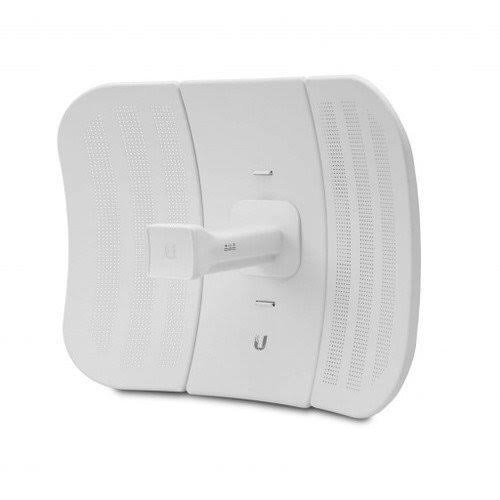
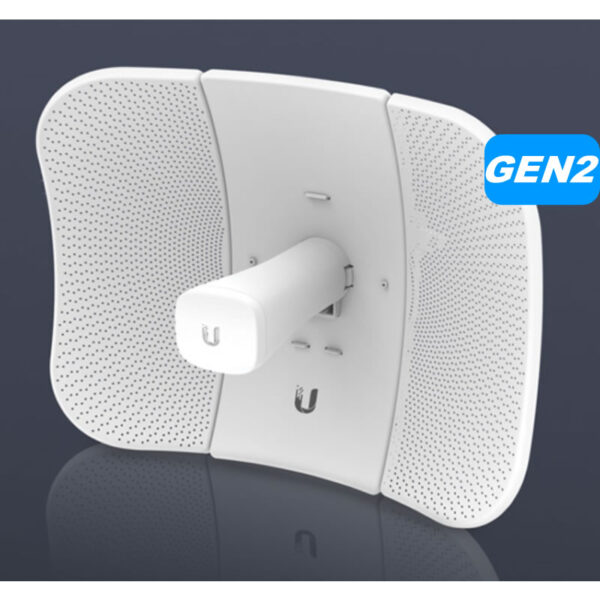
The Ubiquiti LBE-5AC-GEN2, officially named the airMAX LiteBeam 5AC, is a compact outdoor 5 GHz directional wireless CPE designed for point-to-point (PtP), point-to-multipoint (PtMP), WISP subscriber and building-to-building wireless links. Ubiquiti currently lists the exact LBE-5AC-GEN2 with a 23 dBi integrated directional antenna, Gigabit Ethernet and 450+ Mbps total throughput.
The LiteBeam 5AC Gen2 combines the radio and high-gain antenna into one lightweight outdoor device. It supports Ubiquiti's airMAX AC platform and can operate in Access Point or Station mode. In many installations, however, its highly directional antenna makes it especially useful as a subscriber/CPE or one side of a dedicated PtP bridge.
For Kenyan networks, the LBE-5AC-GEN2 can be considered for connecting offices, warehouses, schools, farms, CCTV sites, hotels, estates and other separated locations where laying fibre or Ethernet cable is impractical. It can also receive connectivity from an airMAX sector such as the LAP-120 or LAP-GPS and deliver that connection over Ethernet to a router, switch or access point at the remote site.
Ubiquiti LBE-5AC-GEN2 Key Features
| Feature | Specification |
|---|---|
| Product Name | airMAX LiteBeam 5AC |
| Model | LBE-5AC-GEN2 |
| Wireless Platform | airMAX AC |
| Primary Frequency | 5 GHz |
| Worldwide Frequency Range | 5150–5875 MHz, subject to local regulation |
| Antenna Gain | 23 dBi |
| Published Total Throughput | 450+ Mbps |
| Ethernet | 1 × Gigabit RJ45 |
| Maximum TX Power | 25 dBm |
| Power Method | 2-pair passive PoE |
| Power Supply | 24V, 0.3A Gigabit PoE adapter |
| Supported Voltage | 22–27V DC |
| Maximum Consumption | 7W |
| Operating Modes | Access Point / Station |
| Management Radio | 2.4 GHz |
| Operating Temperature | -40°C to 70°C |
| Wind Survivability | 200 km/h |
| Typical Role | CPE / PtP / PtMP station |
These values come from Ubiquiti's current technical specifications for the exact LBE-5AC-GEN2 model.
5 GHz airMAX AC Wireless
The LBE-5AC-GEN2 belongs to Ubiquiti's airMAX AC wireless family.
The current worldwide hardware frequency range is listed as:
5150–5875 MHz
with the frequencies actually available depending on the configured country and applicable regulations.
This makes the LiteBeam fundamentally different from an ordinary indoor dual-band Wi-Fi access point.
Its primary purpose is outdoor wireless infrastructure.
23 dBi High-Gain Directional Antenna
One of the most important features of the LBE-5AC-GEN2 is its integrated:
23 dBi directional antenna
Ubiquiti confirms the 23 dBi antenna gain in both its current technical specifications and product datasheet.
Instead of spreading radio energy broadly in every direction, the LiteBeam concentrates it toward the remote wireless site.
Conceptually:
Building A

Network
   ↓
LBE-5AC-GEN2
      )))))))))))))))))))))
                              LBE-5AC-GEN2
                                      ↓
                                   Network

                                  Building B
This directional design is what makes LiteBeam useful for longer-range fixed wireless connections.
Ubiquiti LiteBeam 5AC for Point-to-Point Links
A pair of compatible LiteBeam radios can form a point-to-point wireless bridge between two locations.
For example:
MAIN OFFICE

Internet
   ↓
Router
   ↓
Switch
   ↓
LiteBeam 5AC
   ↓
)))))))) 5 GHz PtP Link ((((((((
                              ↓
                        LiteBeam 5AC
                              ↓
                            Switch
                         ↙    ↓    ↘
                       PCs   AP   CCTV

                         REMOTE OFFICE
The bridge can transport Ethernet network traffic between the sites.
This can provide an alternative where trenching fibre is difficult, expensive or disruptive.
LBE-5AC-GEN2 for Point-to-Multipoint Networks
The LiteBeam is also particularly useful as the station/CPE side of an airMAX point-to-multipoint network.
For example:
                    LiteBeam CPE
                         /
                        /
                       /
LAP-GPS / LAP-120 ----- LiteBeam CPE
                       \
                        \
                         \
                    LiteBeam CPE
A central sector access point serves several remote sites, while each remote location uses a directional CPE such as the LBE-5AC-GEN2.
This architecture is especially relevant to:
-
WISPs
-
large estates
-
farms
-
schools
-
CCTV networks
-
industrial compounds
-
remote offices
-
hotels and resorts
LBE-5AC-GEN2 as a WISP Subscriber CPE
The LiteBeam 5AC is particularly well suited to the customer side of a fixed-wireless network.
A typical WISP deployment could be:
WISP Tower
   ↓
LAP-GPS / Rocket + Sector
   ↓
5 GHz airMAX
   ↓
LBE-5AC-GEN2
   ↓
Ethernet
   ↓
Customer Router
   ↓
Phones / PCs / TVs
The LiteBeam establishes the long-range outdoor wireless link.
A separate indoor router or access point then provides local Wi-Fi to the customer's devices.
LiteBeam Is Not a Normal Wi-Fi Access Point
This distinction is important.
The LBE-5AC-GEN2 should not be confused with UniFi products such as:
U6+
U6 Pro
U7 Pro
or other indoor/outdoor client Wi-Fi access points.
The LiteBeam is a directional airMAX wireless radio.
Its primary job is to establish a fixed wireless connection to another compatible wireless infrastructure device.
For local Wi-Fi coverage, use an appropriate Wi-Fi access point behind it.
450+ Mbps Total Throughput
Ubiquiti currently lists:
450+ Mbps total throughput
for the LBE-5AC-GEN2.
This should not be interpreted as a guaranteed 450 Mbps internet speed.
Actual throughput depends on:
-
distance
-
channel width
-
signal strength
-
interference
-
antenna alignment
-
modulation
-
noise floor
-
Fresnel clearance
-
number of stations
-
regulatory restrictions
-
network configuration
-
upstream internet bandwidth
If the internet service itself provides 100 Mbps, installing a LiteBeam cannot turn that connection into 450 Mbps.
Gigabit Ethernet Port
The LiteBeam 5AC Gen2 provides:
1 × 10/100/1000 Mbps Ethernet port
rather than a Fast Ethernet interface.
This is important because the wired interface does not impose the approximately 100 Mbps ceiling associated with older Fast Ethernet CPE equipment.
A typical connection is:
Router / Switch
      ↓
PoE Injector
      ↓
Outdoor Ethernet
      ↓
LBE-5AC-GEN2
The Ethernet cable transports both network data and passive PoE power.
24V Passive PoE
The LBE-5AC-GEN2 uses:
Passive PoE
with Ubiquiti specifying:
Pins 4,5 = positive
Pins 7,8 = return.
The current technical specification lists a supported input range of:
22–27V DC
and a supplied 24V, 0.3A Gigabit PoE adapter for the single-unit package.
This is an important compatibility point.
Passive PoE is not automatically interchangeable with IEEE 802.3af/at PoE.
Do not connect the LiteBeam to an arbitrary PoE source without checking voltage, pinout and power method.
Included 24V PoE Adapter
For the single-unit package, Ubiquiti documents a:
24V, 0.3A Gigabit PoE adapter
with the LBE-5AC-GEN2.
The connection is typically:
                    Outdoor Cable
                         |
                         ↓
                    LiteBeam
                         ↑
                         |
                    PoE OUTPUT
                         |
                  [PoE Injector]
                         |
                    LAN INPUT
                         |
                         ↓
                  Router / Switch
One cable therefore carries power and data to the outdoor radio.
Ubiquiti's older/current package documentation notes that package contents can differ between single and multipack versions, so the exact package should be checked when purchasing.
Low 7W Power Consumption
Ubiquiti specifies maximum power consumption of only:
7W.
That relatively low power demand can be useful for:
remote sites
solar installations
CCTV towers
WISP subscriber sites
and other locations where power availability is limited.
For solar installations, however, the power system should be designed around the total equipment load and required backup time rather than the radio alone.
Maximum 25 dBm TX Power
The LBE-5AC-GEN2 hardware supports maximum transmit output of:
25 dBm.
That does not mean every installation should or legally can operate at maximum output.
The permitted transmit level depends on:
frequency
country
antenna gain
and applicable:
EIRP regulations.
Ubiquiti's installation documentation specifically requires professional installers to configure equipment according to country-specific regulatory requirements.
Dedicated 2.4 GHz Management Radio
The Gen2 model also includes a separate management radio.
Ubiquiti lists its worldwide management-radio range as:
2412–2472 MHz.
This allows convenient local configuration during installation.
Importantly, this does not mean the LiteBeam is a normal dual-band Wi-Fi AP.
The main airMAX network still operates on:
5 GHz.
The 2.4 GHz radio is intended for management.
UISP Mobile Setup
Ubiquiti describes the LBE-5AC-GEN2 as having dedicated management Wi-Fi for easier UISP mobile app support and setup.
This is useful when an installer is working outdoors near the mounted radio.
Instead of repeatedly connecting a laptop by cable, the management interface can simplify initial configuration and alignment work.
airOS Management
The LiteBeam operates on Ubiquiti's airMAX software environment.
Current specifications include support for functions such as:
Bridging
DHCP
Routing
SNMP
SSH
Ping Watchdog
Web management
Traffic shaping
Dynamic ACK
and:
distance adjustment.
This provides significantly more control than a basic consumer Wi-Fi extender.
Access Point and Station Modes

Ubiquiti currently lists:
Access Point
and:
Station
operating modes for the LBE-5AC-GEN2.
This means it can participate in several wireless topologies.
However, because of its 23 dBi directional antenna, one of its most natural applications is as a:
CPE / Station
pointing toward a sector access point or another directional radio.
PtP Channel Widths
Ubiquiti's LBE-5AC-GEN2 datasheet lists the following channel widths in point-to-point mode:
10 MHz
20 MHz
30 MHz
40 MHz
50 MHz
60 MHz
and:
80 MHz.
This provides considerable flexibility when balancing capacity and available spectrum.
PtMP Channel Widths
For point-to-multipoint mode, the datasheet lists:
10 MHz
20 MHz
30 MHz
and:
40 MHz.
The appropriate width depends on network conditions.
A wider channel can offer more capacity, but it also occupies more spectrum.
In a congested environment, a narrower clean channel can sometimes provide a better practical result than a wide noisy channel.
Line of Sight
For reliable long-range performance, the LiteBeam should have a clear wireless path toward the remote radio.
Potential obstacles include:
trees
buildings
hills
billboards
water tanks
and other structures.
A link can sometimes connect despite partial obstruction, but that does not mean it will deliver stable high throughput.
For professional PtP links, clear line of sight should be a major design objective.
Fresnel-Zone Clearance
Visual line of sight is only part of the equation.
Long-range radio links also have a:
Fresnel zone
around the direct path between antennas.
For example:
        Fresnel Zone
      /--------------\
A  --------------------  B
      \--------------/
Trees, roofs or terrain can interfere with this zone even when the remote antenna is technically visible.
This is one reason proper mounting height matters.
Antenna Alignment
Because the LBE-5AC-GEN2 uses a directional antenna, alignment is critical.
A poorly aligned radio can still show a connection but deliver:
lower signal
lower modulation
reduced throughput
and:
greater instability.
Both horizontal direction and vertical elevation should be adjusted carefully.
The pole mount provides physical adjustment to help installers point the radio toward the remote site. Ubiquiti includes a pole-mounting kit with the product.
Compact and Lightweight Design
The LiteBeam measures:
358 × 271.95 × 272.5 mm
and weighs approximately:
800 g without the mount
or:
980 g with the mount.
This is one reason Ubiquiti describes it as an ultra-lightweight airMAX design.
Its relatively low weight makes it practical for pole-mounted CPE installations.
Wind Survivability
Ubiquiti rates the LBE-5AC-GEN2 for:
200 km/h wind survivability
with published wind loading of:
275 N at 200 km/h.
This specification applies to the radio.
The pole, brackets, mast and supporting structure must also be suitable for the expected wind conditions.
Outdoor Operating Conditions
The LBE-5AC-GEN2 is specified for:
-40°C to 70°C
and:
5–95% non-condensing humidity.
It is therefore intended for outdoor fixed-wireless installations.
Proper outdoor cabling, grounding and surge protection remain important.
ESD/EMP Protection
The LiteBeam datasheet specifies:
±24 kV contact / air ESD/EMP protection.
This does not make additional outdoor network protection unnecessary.
Outdoor installations should still consider:
shielded outdoor Ethernet
grounding
surge protection
and:
proper cable entry into the building.
Lightning protection should be approached as a complete installation issue rather than relying only on protection built into the radio.
LBE-5AC-GEN2 for Building-to-Building Internet
A common application is connecting two buildings.
For example:
BUILDING A

Fibre / Starlink
      ↓
    Router
      ↓
LiteBeam 5AC
      ↓
)))))))))))))))))))
                   ↓
             LiteBeam 5AC
                   ↓
                 Switch
              ↙    ↓    ↘
             PC   Wi-Fi  CCTV

               BUILDING B
This allows the remote building to use network connectivity from the main building without a physical data cable between them.
LBE-5AC-GEN2 for CCTV
The LiteBeam is also useful for remote CCTV installations.
For example:
REMOTE CCTV SITE

Cameras
   ↓
PoE Switch
   ↓
LiteBeam
   ↓
)))))))) Wireless Bridge ((((((((
                              ↓
                           LiteBeam
                              ↓
                           Main LAN
                              ↓
                             NVR
The wireless link carries camera traffic back to the central network.
The link should be designed around the combined bitrate of the cameras.
LBE-5AC-GEN2 for Farms
Farms frequently have remote structures separated from the main internet connection.
The LiteBeam can potentially connect:
farm offices
stores
staff quarters
gatehouses
CCTV locations
and:
remote workshops.
Where several remote sites exist, a central sector such as LAP-GPS or LAP-120 may be more efficient than creating many individual PtP pairs.
LBE-5AC-GEN2 for Schools
Schools and campuses can use directional wireless links between:
administration buildings
classroom blocks
libraries
laboratories
dormitories
and:
gatehouses.
The remote building can then have its own switch and Wi-Fi access points.
LBE-5AC-GEN2 for Hotels and Resorts
Hotels and resorts may use wireless backhaul between:
main buildings
cottages
conference facilities
restaurants
security gates
and:
staff areas.
The LiteBeam provides the backhaul connection; dedicated Wi-Fi APs can provide local coverage at the remote location.
LBE-5AC-GEN2 for Warehouses
Suppose two warehouses are separated by a road or open yard.
Instead of trenching Ethernet or fibre, a properly designed LiteBeam PtP bridge can connect their networks.
The remote warehouse can then access:
internet
ERP systems
CCTV
printers
barcode systems
and:
Wi-Fi.
LBE-5AC-GEN2 for Construction Sites
Directional wireless can also be useful for temporary infrastructure.
A LiteBeam link can connect:
site offices
security gates
stores
CCTV installations
and:
temporary buildings.
Because the radio is pole-mounted, it can potentially be relocated as the project changes.
Using LBE-5AC-GEN2 with Starlink
The LiteBeam can extend a Starlink LAN to another building.
Starlink
   ↓
Router
   ↓
LiteBeam A
   ↓
)))))))) PtP ((((((((
                  ↓
             LiteBeam B
                  ↓
                Switch
                  ↓
             Remote Wi-Fi
The LiteBeam does not increase Starlink's bandwidth.
It transports the existing network connection between locations.
Using LBE-5AC-GEN2 with Fibre Internet
The same architecture works with fibre:
Fibre ONT
   ↓
Router
   ↓
Switch
   ↓
LiteBeam
   ↓
Wireless Link
   ↓
LiteBeam
   ↓
Remote LAN
The upstream internet connection does not need to be from Ubiquiti.
Using LiteBeam with MikroTik

MikroTik can provide routing while Ubiquiti handles the wireless bridge.
Internet
   ↓
MikroTik Router
   ↓
Switch
   ↓
LiteBeam 5AC
   ↓
Wireless
   ↓
LiteBeam / airMAX AP
The brands perform different roles and can coexist in a properly configured network.
Using LiteBeam with TP-Link
Likewise, TP-Link switches and access points can be used downstream:
LiteBeam
   ↓
Ethernet
   ↓
TP-Link Switch
   ↓
TP-Link / Omada APs
The important wireless compatibility question concerns the radios forming the airMAX link.
LBE-5AC-GEN2 with LAP-GPS
This is a particularly useful combination for WISP networks.
LAP-GPS
  ↙ ↓ ↘
 /  |  \
LBE LBE LBE
 ↓   ↓   ↓
C1  C2  C3
The LAP-GPS acts as the sector AP, while LiteBeam devices can act as directional subscriber CPEs.
The LAP-GPS provides GPS-synchronized sector functionality, while each LiteBeam points toward the sector.
LBE-5AC-GEN2 with LAP-120
The same concept applies to the broader LAP-120 sector:
              LBE-5AC-GEN2
                   /
                  /
LAP-120 ---------- LBE-5AC-GEN2
                  \
                   \
              LBE-5AC-GEN2
The LAP-120 provides broad sector coverage while each LiteBeam provides a focused directional subscriber connection.
LiteBeam 5AC Gen2 vs LAP-120
| Feature | LBE-5AC-GEN2 | LAP-120 |
|---|---|---|
| Primary Role | Directional CPE / PtP | PtMP sector AP |
| Frequency | 5 GHz | 5 GHz |
| airMAX AC | Yes | Yes |
| Antenna Gain | 23 dBi | 16 dBi |
| Antenna Pattern | Directional | 120° sector |
| Ethernet | 1 × GbE | 1 × GbE |
| Passive PoE | Yes | Yes |
| Published Throughput | 450+ Mbps | 450+ Mbps |
| Typical WISP Position | Customer/CPE | Tower/Base station |
The devices therefore complement one another rather than simply competing.
LiteBeam 5AC Gen2 vs LAP-GPS
| Feature | LBE-5AC-GEN2 | LAP-GPS |
|---|---|---|
| Main Role | CPE / PtP | Sector AP |
| Antenna | Directional | Sector |
| Gain | 23 dBi | 17 dBi |
| GPS Sync | No | Yes |
| Gigabit Ethernet | Yes | Yes |
| airMAX AC | Yes | Yes |
| Typical Deployment | Remote subscriber | Tower sector |
A common network can therefore use LAP-GPS at the central site and LBE-5AC-GEN2 at subscriber sites.
LiteBeam 5AC Gen2 vs NanoBeam 5AC Gen2
Both are directional airMAX AC products, but their physical and antenna designs differ.
The LiteBeam emphasizes:
lightweight construction
23 dBi directional gain
and:
cost-effective long-range CPE operation.
The NanoBeam uses a compact dish-style enclosure and can be attractive where a smaller integrated form factor is preferred.
The better choice depends on the link requirements rather than simply the product family.
LiteBeam 5AC Gen2 vs PowerBeam 5AC
PowerBeam models use a dish reflector design and are typically considered where a more substantial directional antenna architecture is required.
LiteBeam emphasizes:
low weight
simplicity
and:
cost-effective directional connectivity.
For demanding or longer links, PowerBeam or higher-gain LiteBeam variants may be worth considering.
LBE-5AC-GEN2 vs LBE-5AC-LR
Do not confuse the standard LiteBeam with the newer/larger:
LBE-5AC-LR – LiteBeam 5AC Long-Range
The current Long-Range model has a larger enclosure and a 26 dBi antenna, compared with the standard LBE-5AC-GEN2's 23 dBi antenna.
| Feature | LBE-5AC-GEN2 | LBE-5AC-LR |
|---|---|---|
| Antenna Gain | 23 dBi | 26 dBi |
| Ethernet | 1 × GbE | 1 × GbE |
| Power | Passive PoE | Passive PoE |
| Max Consumption | 7W | 7W |
| Approx. Weight without mount | 800g | 1.4kg |
| Positioning | Standard LiteBeam | Long-range variant |
The Long-Range model may be appropriate where additional antenna gain is beneficial, but link design should still be based on actual path requirements.
LiteBeam vs Fibre Optic Cable
| Consideration | LiteBeam Wireless | Fibre |
|---|---|---|
| Trenching | Usually unnecessary | Often required |
| Deployment | Potentially quick | Civil work may be needed |
| Line of sight | Important | Not required |
| RF interference | Possible | No |
| Physical cable between sites | No | Yes |
| Capacity | Radio/link dependent | Very high |
| Lightning isolation between sites | Requires proper protection | Fibre is non-conductive |
| Relocation | Relatively easy | More difficult |
LiteBeam can be extremely practical where fibre construction is expensive or impossible.
Fibre may still be preferable for maximum capacity and long-term critical infrastructure.
Advantages of Ubiquiti LBE-5AC-GEN2
The LiteBeam's biggest advantage is its combination of 23 dBi directional gain, Gigabit Ethernet, 450+ Mbps published throughput and lightweight outdoor construction.
Its low 7W maximum power consumption also makes it practical for remote sites, while the included management radio simplifies field configuration.
For WISP deployments, it provides a practical subscriber CPE that can work with suitable airMAX sector infrastructure. For private networks, a pair of compatible radios can create a building-to-building wireless bridge without trenching a physical cable.
Limitations of Ubiquiti LBE-5AC-GEN2
The LiteBeam is not an ordinary Wi-Fi access point. A customer who wants Wi-Fi coverage around a house or office generally needs a separate Wi-Fi AP or router.
Its directional design also means proper alignment is essential. A badly aimed LiteBeam can perform poorly even if the two sites are relatively close.
Finally, real-world wireless performance depends on line of sight, Fresnel clearance, interference, channel configuration and regulatory limits. The 450+ Mbps specification should not be treated as guaranteed throughput for every deployment.
Who Should Buy the Ubiquiti LBE-5AC-GEN2?
The LiteBeam 5AC Gen2 is particularly relevant for:
-
WISP subscriber installations
-
building-to-building links
-
remote offices
-
warehouses
-
farms
-
schools
-
CCTV backhaul
-
estates
-
hotels and lodges
-
construction sites
-
remote network extensions
-
Starlink network extensions
-
fibre network extensions
It is most appropriate where a fixed directional outdoor wireless connection is required.
Ubiquiti LBE-5AC-GEN2 Price in Kenya
The price of the Ubiquiti LBE-5AC-GEN2 in Kenya can vary with stock, exchange rates, supplier source and warranty arrangements.
A complete installation may also require:
a second compatible radio or central sector AP
outdoor Ethernet cable
surge protection
mounting infrastructure
switches
routers
and:
professional installation and alignment.
Contact Orbitlink Solutions for the current Ubiquiti LBE-5AC-GEN2 price and stock availability in Kenya.
Why Buy Ubiquiti LBE-5AC-GEN2 from Orbitlink Solutions?

Selecting a long-range wireless device should begin with the actual link requirement. Distance alone is not enough. The installer should consider line of sight, Fresnel clearance, antenna height, interference, desired throughput and the radio at the opposite end.
For a WISP deployment, the LiteBeam can be paired with suitable airMAX sector infrastructure such as LAP-120, LAP-GPS or other compatible airMAX systems. For dedicated building-to-building connectivity, a properly designed pair of directional radios can provide a transparent network bridge between the sites.
Orbitlink Solutions can assist with the supporting networking equipment needed around the LiteBeam, including routers, switches, outdoor Ethernet cabling, PoE equipment, surge protection and Wi-Fi access points.
Watch the Ubiquiti LBE-5AC-GEN2 Video
The LBE-5AC-GEN2 is best understood as a directional network bridge or subscriber radio rather than a long-range Wi-Fi router. Its 23 dBi antenna is intended to concentrate the wireless connection toward another fixed radio. Once the link reaches the remote location, Ethernet can feed a switch, router or conventional Wi-Fi access point for local users.
For point-to-point installations, buying two radios is only the beginning of the project. The two mounting locations need suitable line of sight, the antennas need accurate alignment, the Fresnel zone needs sufficient clearance, and an appropriate operating channel must be selected. A shorter well-designed link can outperform a poorly engineered longer link using more expensive equipment.
The LiteBeam also fits naturally into larger airMAX networks. A WISP can use a sector AP at a tower and install LBE-5AC-GEN2 units at customer premises. This allows several directional subscriber radios to communicate with central infrastructure while each customer's local router or access point handles Wi-Fi inside the premises.
Frequently Asked Questions About Ubiquiti LBE-5AC-GEN2
What is the Ubiquiti LBE-5AC-GEN2?
It is a 5 GHz airMAX AC directional outdoor radio/CPE with a 23 dBi integrated antenna, Gigabit Ethernet and 450+ Mbps published total throughput.
What is the LBE-5AC-GEN2 mainly used for?
It is commonly suited to PtP wireless bridges, PtMP subscriber/CPE installations, WISP connections and building-to-building networking.
What frequency does LiteBeam 5AC Gen2 use?
Its primary radio operates in the 5 GHz band, with Ubiquiti listing worldwide hardware support from 5150–5875 MHz subject to local regulatory settings.
What is the antenna gain?
The LBE-5AC-GEN2 has an integrated 23 dBi directional antenna.
What is the maximum throughput?
Ubiquiti lists 450+ Mbps total throughput. Actual throughput depends on the link and environment.
Does LBE-5AC-GEN2 have Gigabit Ethernet?
Yes. It has one Gigabit RJ45 port.
What PoE does LBE-5AC-GEN2 use?
It uses 2-pair passive PoE, not ordinary IEEE active PoE.
What voltage does it use?
Ubiquiti's current technical page specifies 22–27V DC, with a 24V adapter used for normal powering.
Is the PoE adapter included?
The single-unit package is documented with a 24V, 0.3A Gigabit PoE adapter. Multipack contents can differ.
How much power does it consume?
Maximum power consumption is 7W.
What is its maximum TX power?
Ubiquiti lists 25 dBm maximum output, subject to country-specific regulatory limits.
Does LiteBeam have management Wi-Fi?
Yes. The Gen2 model includes a dedicated 2.4 GHz management radio to assist configuration.
Is LiteBeam a normal Wi-Fi router?
No. It is a directional outdoor airMAX radio. Use a separate router or access point for normal client Wi-Fi.
Can phones connect directly to LiteBeam?
That is not its intended role. It is designed for fixed wireless infrastructure rather than normal phone/laptop Wi-Fi access.
Can two LBE-5AC-GEN2 units create a wireless bridge?
Yes. Compatible units can be configured as part of a point-to-point wireless bridge.
Can LiteBeam work with LAP-120?
It can be used as a directional airMAX CPE in an appropriately configured compatible PtMP architecture.
Can LiteBeam work with LAP-GPS?
Yes, it can serve as a subscriber-side directional CPE in an appropriately designed compatible airMAX AC network.
Can I use LBE-5AC-GEN2 with Starlink?
Yes. A LiteBeam bridge can transport a LAN downstream of Starlink between locations. It does not increase Starlink's internet bandwidth.
Can I use it with fibre?
Yes. It can extend the Ethernet network downstream of a fibre router.
Can I use it with MikroTik?
Yes. MikroTik can handle routing while LiteBeam handles the wireless bridge.
Can I use TP-Link switches or access points behind it?
Yes. Standard Ethernet equipment can be used downstream when properly configured.
Is LBE-5AC-GEN2 suitable for CCTV?
Yes. It can provide wireless backhaul between remote CCTV locations and the main network, provided the link has sufficient capacity.
Does LiteBeam need line of sight?
Clear line of sight and adequate Fresnel-zone clearance are strongly recommended for reliable fixed wireless performance.
Is LBE-5AC-GEN2 weather resistant?
It is designed for outdoor operation and is specified for -40°C to 70°C with wind survivability up to 200 km/h.
How far can LBE-5AC-GEN2 reach?
There is no single guaranteed distance. Link performance depends on the opposite radio, line of sight, Fresnel clearance, antenna alignment, interference, channel width, permitted power and required throughput.
Is LBE-5AC-GEN2 the same as LBE-5AC-LR?
No. The LBE-5AC-GEN2 has a 23 dBi antenna, while Ubiquiti's current LBE-5AC-LR Long-Range model has a 26 dBi antenna and larger physical design.
What is the Ubiquiti LBE-5AC-GEN2 price in Kenya?
Contact Orbitlink Solutions for the current price and stock availability.
Buy Ubiquiti LBE-5AC-GEN2 in Kenya
The Ubiquiti airMAX LiteBeam 5AC Gen2 is a practical choice for fixed outdoor wireless networking where a focused directional connection is required. Its combination of a 23 dBi antenna, 450+ Mbps published throughput, Gigabit Ethernet, airMAX AC, 24V passive PoE and dedicated management Wi-Fi makes it particularly useful for WISP subscriber installations and building-to-building links.
The quality of the installation remains just as important as the hardware. Proper antenna alignment, line of sight, Fresnel-zone clearance, channel planning, outdoor cabling, grounding and surge protection should all form part of a professional installation.
Contact Orbitlink Solutions
Orbitlink Solutions
Lyric House, 7th Floor, Room S9, Kimathi Street, Nairobi
Call / Text / WhatsApp: +254 743 720 551
Email: info@orbitlinksolutions.co.ke
Alternative Email: orbitlinksolutions@gmail.com
Opening Hours: Monday–Saturday, 9:00 AM–6:00 PM
Availability: Nairobi pickup and nationwide delivery
Contact Orbitlink Solutions for the current Ubiquiti LBE-5AC-GEN2 price in Kenya, stock availability and assistance selecting compatible airMAX sector access points, PtP radios, PoE equipment, outdoor cabling, routers, switches and other networking equipment.
Need Help Choosing? Ask a Technician
Get guidance on setup, compatibility, stock, and delivery before buying for your project.